Kone Academy Blog
Explore research notes, system engineering breakthroughs, and curriculum announcements from the Kone Code, Lab, and School team.

Computational Thinking: The Art of Structured Logic
Mastering loop patterns, conditional branches, and modular algorithms before writing syntax. Learn how to think like a compiler.


Physical AI: Connecting Code to Microcontrollers
Moving from the browser sandbox to real-world electrical grids. A deep dive into wiring protocols, sensors, and actuators.

Digital AI: Decoupling Large Language Models and Compute
How neural networks digest data, mathematical weights, and massive compute to generate predictions. Demystifying the LLM pipeline.
Deconstructing the Event Loop: Microtasks, Macrotasks, and High-Throughput I/O
A deep dive into the V8 call stack, libuv thread pool, microtask queues, and macrotask starvation in high-concurrency Node.js systems.

Building Resilient Double-Entry Ledgers: ACID Guarantees and Idempotency in Fintech
How to architect financial bookkeeping systems that guarantee zero balance drift under high network concurrency, network partitions, and duplicate webhooks.

Demystifying UART, SPI, and I2C: The High-Speed Communication Protocols of Hardware
Comparing bus speeds, clock synchronizations, pull-up resistors, and signal integrity across embedded microcontroller communication channels.

From Math to Canvas: Introduction to GLSL Shaders and 3D WebGL Coordinates
Bridging linear algebra, vertex coordinates, and fragment rasterization. Write your first GPU-accelerated canvas shaders in Three.js.

Vector Embeddings and Semantic Search: Building RAG Pipelines from Scratch
How high-dimensional cosine similarity, HNSW indexing, and chunking strategies transform raw document databases into intelligent AI search engines.

Automated Soil Telemetry: Designing Low-Power IoT Mesh Networks in Agritech
Deploying battery-efficient sensor arrays across remote agricultural fields. ESP-NOW, deep sleep modes, and solar power management.

Geospatial Indexing at Scale: H3 Hexagons and Real-Time WebSocket Dispatch
Partitioning planetary maps into discrete hexagonal hierarchies. How high-concurrency transit apps match millions of vehicles in milliseconds.

Containerization to Orchestration: What Every Developer Must Know About Docker & Kubernetes
From Linux kernel cgroups and namespaces to multi-pod deployment manifests, ingress controllers, and zero-downtime rolling updates.

Defending Against the OWASP Top 10: Enterprise Security and Threat Modeling in 2026
Securing modern API endpoints against BOLA, SSRF, injection attacks, and token tampering with cryptographically secure session boundaries.

Bridging the Logic Gap: Why Early STEM and Physical Prototyping Shape Master Engineers
Transitioning younger minds from visual block programming to real typed code and interactive robotics. Cultivating genuine computational intuition.

Cache Locality and Memory Layout: Squeezing Peak Flops in C and Rust
Understand CPU caches (L1/L2/L3), memory bus alignment, false sharing, and cache-friendly data structures to squeeze maximum throughput from modern silicon.

Zero-Knowledge Proofs in Payment Channels: Verifiable Settlement with zk-SNARKs
How arithmetic circuits, quadratic arithmetic programs (QAP), and polynomial commitments allow verifiable financial settlements without disclosing transaction values or account identities.

Fine-Tuning SLMs on Consumer GPUs: A Deep Dive into LoRA and QLoRA
Demystifying parameter-efficient fine-tuning (PEFT): rank decomposition matrices, 4-bit NormalFloat quantization, and training task-specific models on single GPUs.
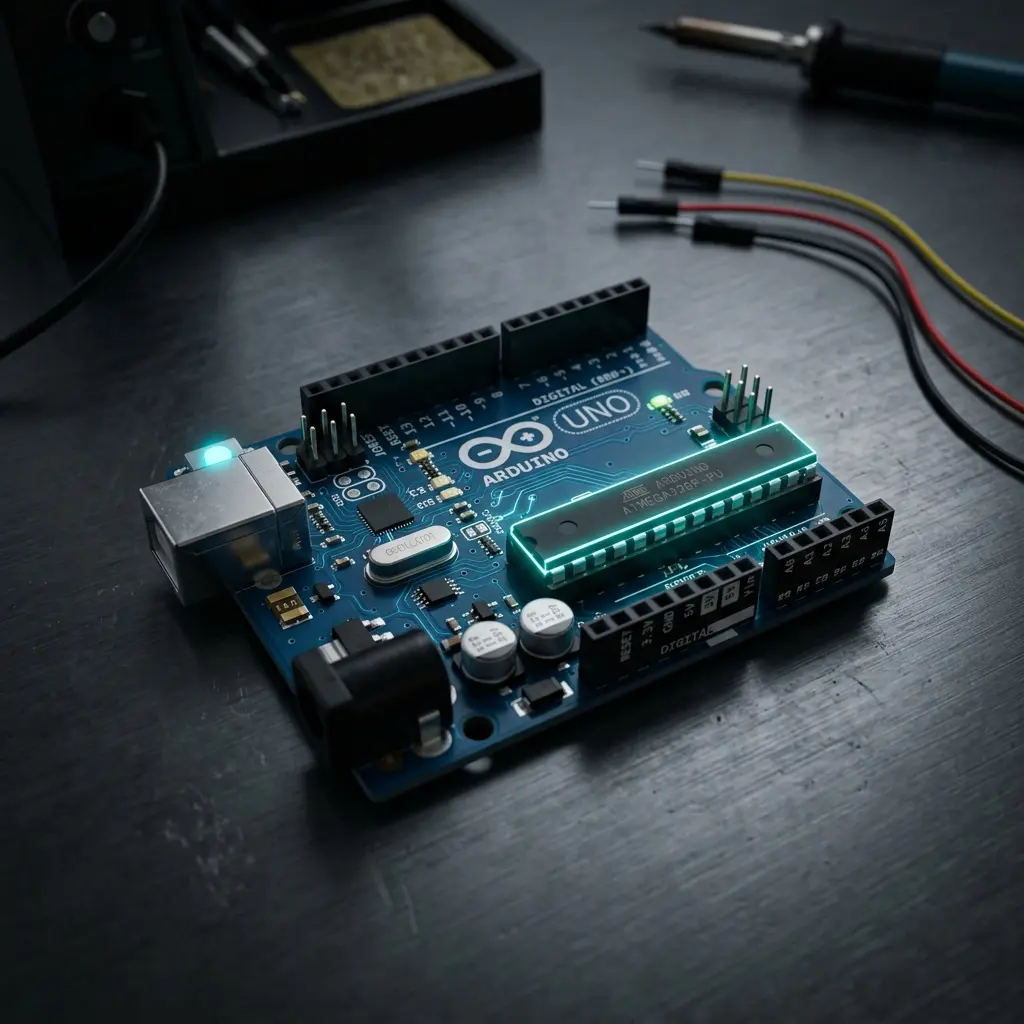
Mastering Embedded Concurrency: FreeRTOS Task Scheduling and Semaphore Design
Transitioning beyond super-loops: preemptive priority-based scheduling, mutexes, counting semaphores, and avoiding priority inversion in mission-critical embedded systems.

Ray Marching and Signed Distance Functions: Procedural 3D Worlds in Shaders
Step into sphere tracing algorithms, CSG operations (union, intersection, smooth subtraction), and fragment shader physics to render complex mathematics in real time.

Edge Computer Vision in Agritech: Real-Time Plant Pathology with Lightweight YOLO
Optimizing convolutional neural network backbones for ONNX and Coral TPU runtimes, performing bounding-box inferences on leaf pathogens with zero cloud dependency.

Autonomous Motion Planning: Comparing A* Grid Search with Continuous RRT
Comparing grid-based heuristic graph search with sampling-based motion planning in continuous high-dimensional configuration spaces for mobile logistics robots.

Demystifying Distributed Consensus: How Raft and Paxos Prevent Split-Brain
Understanding leader elections, log compaction, split-brain mitigation, and quorum safety when building fault-tolerant cluster backbones.

Applied Modern Cryptography: Elliptic Curves, Ed25519, and Authenticated Encryption
From Galois field arithmetic to Twisted Edwards curves: implementing tamper-proof digital signatures and forward-secret Diffie-Hellman key exchange.

Quantifying Technical Debt: Architectural Audits and Coupling Metrics for Tech Leads
A rigorous mathematical and operational framework for tracking dependency churn, cyclomatic complexity, coupling metrics, and calculating ROI on refactoring.
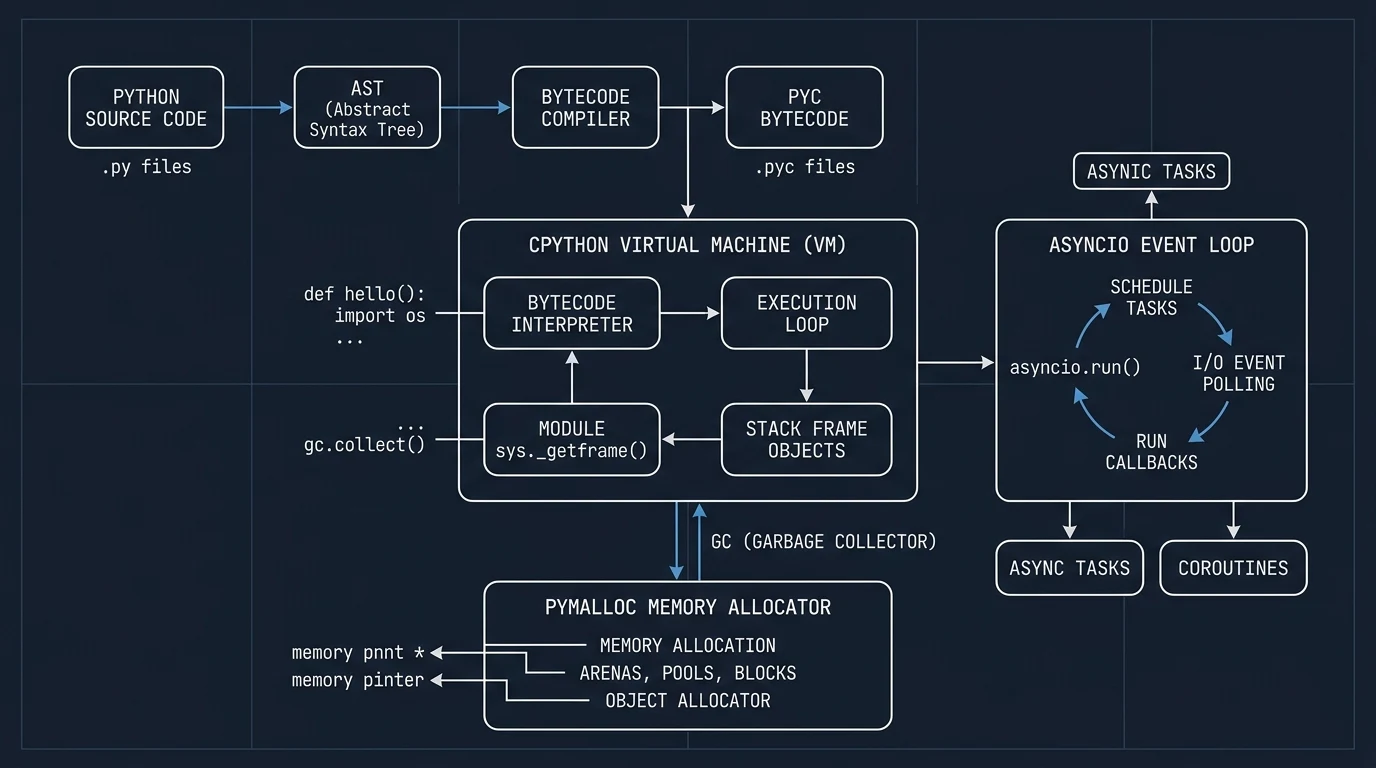
Mastering Python: From CPython Virtual Machine Internals to High-Throughput Architecture
A comprehensive masterclass on CPython bytecode compilation, PyMalloc memory architecture, cyclic garbage collection, GIL free-threading, descriptor protocols, and asyncio event loops.